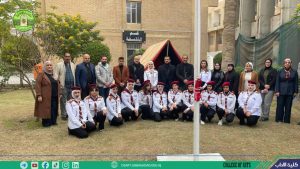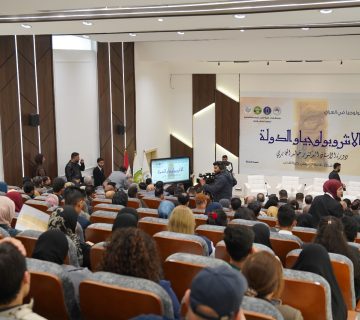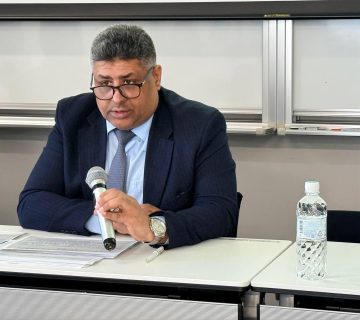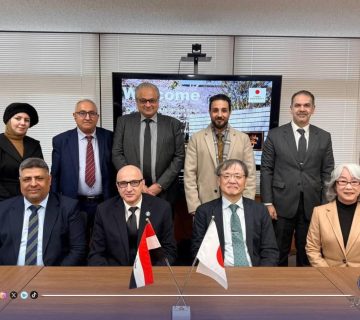
Under the patronage of the Dean of the College of Arts at the University of Baghdad, Prof. Ali Abdulameer Sajit, Ph.D., and in the presence of Dr. Nibal and Ms. Safiya from the College of Physical Education for Women, the College of Arts organized a training workshop on the proper methods of tent erection, dismantling, and the performance of official flag-raising ceremonies.
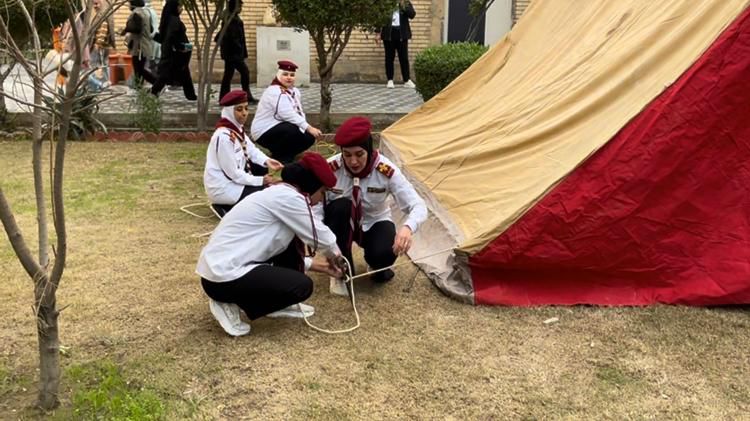
The workshop aimed to explain the scientific principles underlying tent erection and the correct mechanisms for securing tents. This was followed by a practical application session held in one of the College’s gardens, where participants were trained on field-based tent erection and the performance of flag-raising procedures in accordance with approved protocols. The workshop focused on ensuring the structural stability of tents, enhancing resistance to wind and varying weather conditions, and achieving balanced load distribution across anchoring points to prevent fabric tearing or pole bending. In addition, it emphasized complete insulation of the interior space from ground moisture and water seepage.
The workshop demonstrated that tent stability largely depends on the angles at which the ropes are tensioned, with a forty-five-degree angle identified as the most effective. It also highlighted that ground type—whether sandy, rocky, or clay-based—determines the appropriate type of stakes and installation methods required to ensure secure anchoring. Practical application confirmed that proper sloping of the tent fabric prevents the accumulation of rainwater on the tent surface, thereby protecting it from sudden collapse.
The workshop recommended the use of adjustable tension knots, as they allow for easy modification of rope tension without the need for retying. It also advised driving stakes at an angle opposite to the direction of tension to increase resistance strength and stressed the importance of regularly inspecting guy ropes during use, particularly after strong winds or rainfall, to retighten any loosened components.
This workshop aligns with the Sustainable Development Goals, particularly Goal 4 (Quality Education) through the promotion of applied learning and the development of practical skills, and Goal 11 (Sustainable Cities and Communities) by fostering a culture of safety and reliance on sound field practices in educational and training activities.