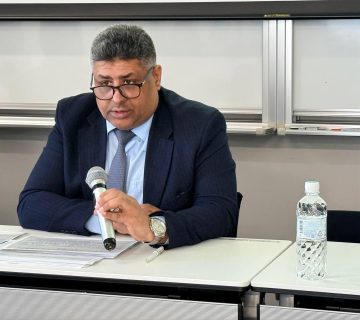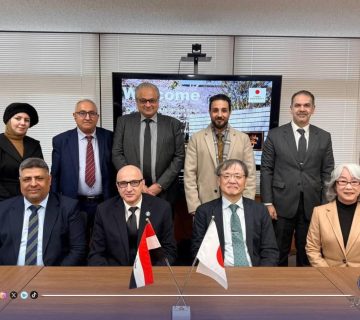
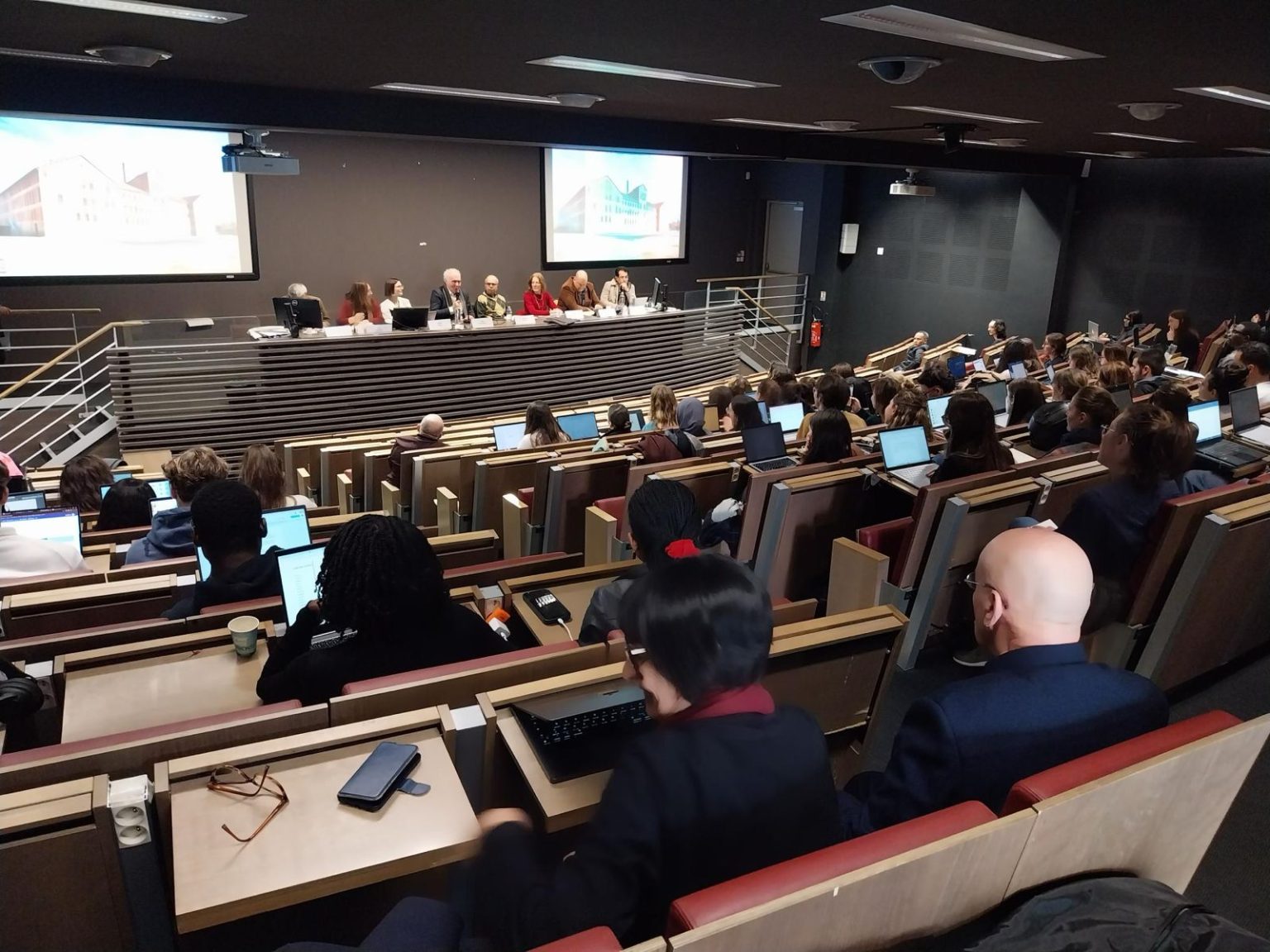
The UNESCO Chair at the University of Baghdad, represented by Mr. Salah Falayfel Al-Jabri, Professor of Philosophy in the Department of Philosophy, College of Arts, participated in the First International European Meeting of the UNESCO Global Academic Network on Genocide Education and Prevention, held at Camp des Milles in Marseille, France.
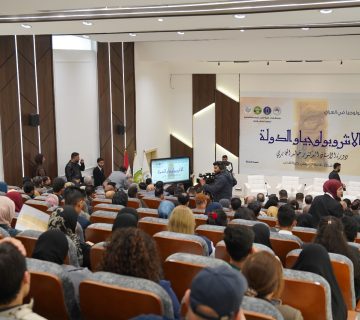
The meeting included a series of workshops conducted over two days, concluding with a panel discussion at the University of Marseille attended by final-year undergraduate students. The panel was followed by in-depth academic discussions between the participating scholars and the students.
The lecture delivered by the Chairholder of the UNESCO Chair at the University of Baghdad addressed the methodology of research in genocide studies and the objectives such research seeks to achieve, situating the topic within its philosophical background. The lecture distinguished between the epistemological grounding of genocide studies—aimed at establishing a solid knowledge base focused on understanding, explanation, and the study of causes and contributing factors—and the necessity of such grounding for examining the concept of genocide, its justifications, and the motives that lead to or facilitate its occurrence as a pathological social phenomenon requiring precise analysis through the identification of its underlying causes.
It was emphasized that when knowledge production is oriented toward understanding, achieving the ultimate goal—prevention and restraint—becomes more feasible. Preventing genocide, therefore, requires shifting the direction of discourse from theoretical understanding to practical application; that is, from asking what is genocide, how does it occur, and why does it occur? to asking what must be done? what should and should not be done? what actions must be taken, and what must be prevented and restrained?
At this stage, the discussion transitions from the domain of theoretical reason, concerned with comprehension and explanation, to that of practical reason, which focuses on defining standards of action. Accordingly, after achieving understanding, the central question becomes: What must be done to prevent genocide?
Education, in this context, encompasses both dimensions: the theoretical dimension, which involves understanding and rational inquiry, and the practical dimension, which focuses on prevention, peacebuilding, coexistence, and social integration.
The presentation concluded with the introduction of a project documenting the Speicher massacre as a model for applying both the theoretical and practical dimensions of genocide studies, with particular emphasis on national reconciliation and social peace.